Showing posts with label Love for Krsna. Show all posts

Thursday, January 2, 2014

Krisna calling

I found this amazing piece of documentary on the ISCKON movement, a source that influenced me in the path of spiritual quest, and thought of sharing the philosophy with you. Interesting audio visual on the path to transformation.


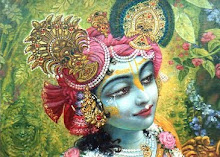
Krisna means the most beautiful and attractive person...

Happy New Year with the most melodious Krisna chants

Chanting is my mantra this new year. May 2014 bring harmony and spiritual enlightenment to one and all.

Hare Krisna!

Wednesday, April 17, 2013

Krsna bhog: food for the soul!

It has been years since I have written in this space...actually since I have written at all!!! Feels good to be back here yet again. :)

I am very excited to share with you 2 books which I've been wanting to buy for years. I first found them 6 years back while looking for Janmashthami Bhog recipies. Unfortunately buying them online was a nightmare and I kept looking for them across my Isckon visits but in vain (the last one happened at the Mumbai temple on Monday)... I was surprised not to find them at Mayapur and after that kept trying to look for them across various cities untill it occured to me to explore the city of 'Flipkart'! :)

Finally, I am expecting my copies to reach me on Sunday...

To end the suspense...these are the treasures I have been talking about:

Lord Krishna's Cuisine: The Art of Indian Vegetarian Cooking


Finally back in print--the definitive volume on Indian vegetarian cooking. Created by a noted author and lecturer, Lord Krishna's Cuisine features more than 500 recipes, filled with fresh produce and herbs, delicate spices, hot curries, and homemade dairy products. All recipes are based on readily available ingredients and have been scrupulously adapted for American kitchens. The recipes are enlivened by the author's anecdotes and personal reminiscences of her years in India, including stories of gathering recipes from royal families and temple cooks, which had been jealously guarded for centuries. Hailed by Gourmet as "definitive," and as "a marvelous source for vegetarians" by Bon Appetit, Devi has created the landmark work on the world's most sophisticated vegetarian cuisine. Repackaged and evocatively illustrated, Lord Krishna's Cuisine unlocks the mysteries of the most healthful and delicious recipes of the world.


You can purchase the book here.

The Hare Krishna Book of Vegetarian Cooking / Adiraja Dasa

An introduction to Indian vegetarian cooking. Over 100 recipes and detailed instructions on preparing all the essential, unique ingredients that make up Indian vegetarian cuisine. From the simple to the advanced. You\'ll first learn how to use utensils already in your kitchen to replace some of those found in Indian kitchens. The 11-page chapter on spices and herbs is the best around. The ancient art of planning which dishes for each menu and how a meal is served is clearly explained. Then come 120 tested recipes for breakfast, lunch or dinner. Preface by actress Hayley Mills.

You can purchase the book here.


I am sure these books will liven up the Vaishnav kitchen like never before...

Signing off with one of my favorites for you:


KrsnaPriyasi...

Monday, February 14, 2011

Searching the meaning of Radha-Krisna

'radheti nama nava-sundara-sidhu mugdham
krsneti nama madhuradbhuta-gadha-dugdham
sarva-ksanam surabhi-raga-himena ramyam
krtva tadaiva piba me rasane ksud-arte'

"An excellent fresh nectar drink with endless subtle tastes - Such is the name of Radha, by whom all three worlds are graced.
Condensed milk that is wonderfully delicious, thick and sweet - Such is the name of Krishna, in whom all attractions meet.
Now mix these drinks, O thirsty tongue, and add the fragrant ice Of love, a prize the wise will try to buy at any price.
And then at every moment drink this beverage most fine, And make my heart supremely blissful, peaceful, and divine."

(from Stavavali, by Raghunatha Dasa Gosvami. Poetic rendition of translation by Dravida dasa)

Monday, February 7, 2011

Lotus feet


Lotus feet                            

A word metaphorically used to describe the feet of the Lord. 

Lotus is the symbol of  beauty and purity.

The word itself makes me want to surrender....

For an in depth read on the sublime essance of the Lotus Feet, click here.

Friday, February 4, 2011

Jai Radha Madhav


Jai radha-madhav, jai kunja-vihari


Jai gopi-jana-vallabh jai giri-var-dhari

Jashoda-ranjana braja-jana-ranjana

Jamuna-tira-vana-chari


I was lucky to witness the fullness of the river Yamuna during the monsoons of 1995 during one of my numerous visits to Vrindavan. I was a teenager then and I would've listened to Samarpan innumerable times on my 'walkman' while I sat on the river bank watching the river nearly overflow. Devine is all I can say...

This song brings back all those amazing memories of that monsoon evening when I was so lost dreaming (visualising) of the Leela's that may have been witnessed by gopi's in this holy abode... sigh... wish... :)

Sunday, October 3, 2010

Hamare ghar ke lalla-ji!

हमारे प्राणों में रहने वाले और हमारे रखवाले

Thursday, June 17, 2010

Yashoda-maiya: unselfconscious tenderness and maternal bliss

Yashoha-maiya, perhaps the best ever description of a mother-child relationship. Selflessness, pride, shelter, support, fear, affection, love, stimuli, sacrifice; so much more that words cant express.

Yashoda-maiya though orchestrated as one of the character in Mahabharat has been a pivotal role in making this epic come alive.

I derive a lot of strength from her personality. Her sacrifice was the greatest and her affection was in comparable.

This picture has been one of my favorites for a very long long time.

Wednesday, June 16, 2010

Dance of the flute


ananyāś cintayanto māḿ

ye janāḥ paryupāsate

teṣāḿ nityābhiyuktānām

yoga-kṣemaḿ vahāmy aham


Created by Krishna, this world around us exists only for a short time. Infinite in it's expressions.

Tuesday, June 1, 2010

Mai to saawre ke rang raachi

Mein Tho Sanware Ke Rang Raachi
Saji Sringar Baandhi Pag Ghoongharoo
Lok Laaj Taji Naachi
Mein Tho Sanware Ke Rang Raachi


Gayee Kumathi Layee Sadhu Ki Sangati
Bhagath Roop Bhayee Saanchi
Gaay Gaay Hari Ke Gun Nisdin
Kaal Vyaal Soon Baanchi
Un Bin Sab Jag Khaaro Laagath
Aur Baat Sab Kaanchi
Meera Sri Giridhar Lal Soon
Bhagathi Rasili Jaanchi

Krisna...

I worship Govinda, the primeval Lord, who is adept in playing on His flute, with blooming eyes like lotus petals with head decked with peacock's feather, with the figure of beauty tinged with the hue of blue clouds, and His unique loveliness charming millions of Cupids!
8 famous names of tulsi.

Tulasi: One who has no comparison.

Vrindavani: One who first manifested in Vrndavana.


Vrinda: The goddess of all plants and trees.

Visvapujita: One whom the whole universe worships.

Puspasara: The topmost of all flowers, without whom Krishna does not like to look upon other flowers.

Nandini: Seeing whom gives unlimited bliss to the devotees.

Krishna-jivani: The life of Sri Krishna.

Visva-pavani: One who purifies the three worlds.

Tulsi- holy basil

Tulsi, which is Sanskrit for "the incomparable one", is worshiped throughout India, most often regarded as a consort of Vishnu in the form of Mahalakshmi. There are two types of Tulsi worshiped in Hinduism—"Rama Tulsi" has light green leaves and is larger in size; "Krishna Tulsi" has dark green leaves and is important for the worship of Vishnu. Many Hindus have tulsi plants growing in front of or near their home, often in special Tulsi pots. It is also frequently grown next to Vishnu temples, especially in Varanasi.

In the ceremony of Tulsi Vivah, Tulsi is ceremonially married to Vishnu annually on the eleventh bright day or twelfth of the month of Kartika in the lunisolar calendar. That day also marks the end of the four month cāturmāsya period, which is considered inauspicious for weddings and other rituals, and so the day inaugurates the annual marriage season in India. The ritual lighting of lamps each evening during Kartika includes the worship of the Tulsi plant, which is considered auspicious for the home. Vaishnavas especially follow the daily worship of Tulsi during Kartika.

Vaishnavas traditionally use japa malas made from tulsi stems or roots, which are an important symbol of initiation. Tulsi malas are considered to be auspicious for the wearer, and believed to put them under the protection of Vishnu or Krishna. They have such a strong association with Vaishnavas, that followers of Vishnu have long been called "those who bear the tulasi round the neck".